I Built an AI That Reads Contracts. Here's What Two Years of Hand-Reading Taught Me First.
I spent two years reviewing tender clauses by hand before I built an AI tool to do it for me.
The math was always going to break.
The problem with 250-page tenders
A typical infrastructure tender runs 80–250 pages. Most of it is boilerplate. The 5% that actually matters — the clauses that decide whether you carry the risk or the client does — sits buried between standard paragraphs that read identical across 12 different procurements.
Miss one indemnity clause. Miss one variation procedure with a 14-day window. Miss one liability cap that doesn't match what your insurer will back. The margin you priced into the bid is gone before you've signed.
This isn't a theoretical problem. It's the reason project margins collapse during execution even when the technical work goes well. The risk was always there in the contract — it just wasn't flagged before signature.
For two years I read every page. A checklist I rebuilt project by project. It worked, but only because I refused to delegate it. Nobody else at the firm could carry that risk.
That's a scaling problem dressed up as a quality control problem.
What I actually built
So I built the tool I wished existed.
It reads the bestek, contract, and annexes. Flags every clause touching risk, payment, variation, liability, IP, termination. Cites page and clause number. Compares against fair-risk baselines per contract family — FIDIC Red, Yellow, Silver, bespoke government. And asks follow-up questions when something is genuinely ambiguous, instead of hallucinating an answer.
Under the hood it's a structured pipeline — extraction, classification, clause comparison, exception logging — wrapped around Claude, with a NotebookLM corpus of every contract my firm has touched in the last five years. No magic. No single all-knowing prompt. Each stage of the pipeline has a specific job and produces a specific output that feeds the next stage.
The structured pipeline matters more than the model. A generic prompt dumped on a raw contract produces generic output. Extraction → classification → comparison → exception logging produces something a senior engineer can actually act on.
What changed at the firm
Three things shifted once the tool was in use:
Pre-bid clause review went from 6 hours to 35 minutes for an average tender.
That 5.5 hours doesn't disappear — it goes back into technical work, pricing analysis, or the next proposal. Across 15–20 significant tenders a year, that's a material reallocation of senior capacity.
Two engineers who never used to touch contracts can now produce a first-pass risk register.
The tool codified what I was checking for and made it executable by someone other than me. The checklist I'd been building in my head over two years became a structured output anyone on the team could interpret. The firm stopped being one deep review away from a blind spot.
I catch things I used to miss because I was reading the boilerplate too.
This was the unexpected one. When you're hand-reading 250 pages, attention degrades. You pattern-match the boilerplate and slow down for the novel sections — except you can't always tell which sections are novel until you've already read them quickly. The tool treats every clause with the same attention. That's where it found two liability caps I'd missed on recent reviews.
The lesson
The lesson, looking back: the AI tool wasn't the breakthrough. Documenting what I'd been doing in my head for two years was. The model just made it executable for the rest of the firm.
Every engineer who's been doing contract review for a decade has built a mental model of what to check for. That mental model is worth something. It's institutional knowledge that currently lives in one head, blocks the firm from scaling past the founder, and walks out the door when that person leaves.
The AI tool doesn't replace that judgment. It externalises it — turns it from a personal checklist into a firm-wide system.
Most engineering firm directors are sitting on workflows like this. Knowledge in one head, blocking the firm from scaling past the founder. The question isn't whether AI can read your contracts. It's whether you've ever written down what you're checking for.
Where to start
If contract clause review is currently a one-person process at your firm, the first step isn't building a tool. It's writing the checklist.
Write down every clause type you check for. The risk categories that matter for your contract families. The things that have burned you in the past. What a 14-day variation window actually means in practice. What a liability cap that doesn't match your insurer's terms looks like.
That documentation is the corpus. Once it exists on paper, making it executable with AI is the engineering problem — and that's the tractable part.
What's the workflow at your firm that nobody else can carry yet?
Want the Director's AI Workflow Stack? Comment GUIDE below and I'll send it.
I write about AI for engineering and construction firms weekly: → Full breakdown: https://sigmametrix.net/insights/built-ai-reads-contracts → Free AI Readiness Audit (7 questions → your 2-page playbook): https://sigmametrix.net/audit → Newsletter for AEC firm directors: https://sigmametrix.kit.com/8686be4583
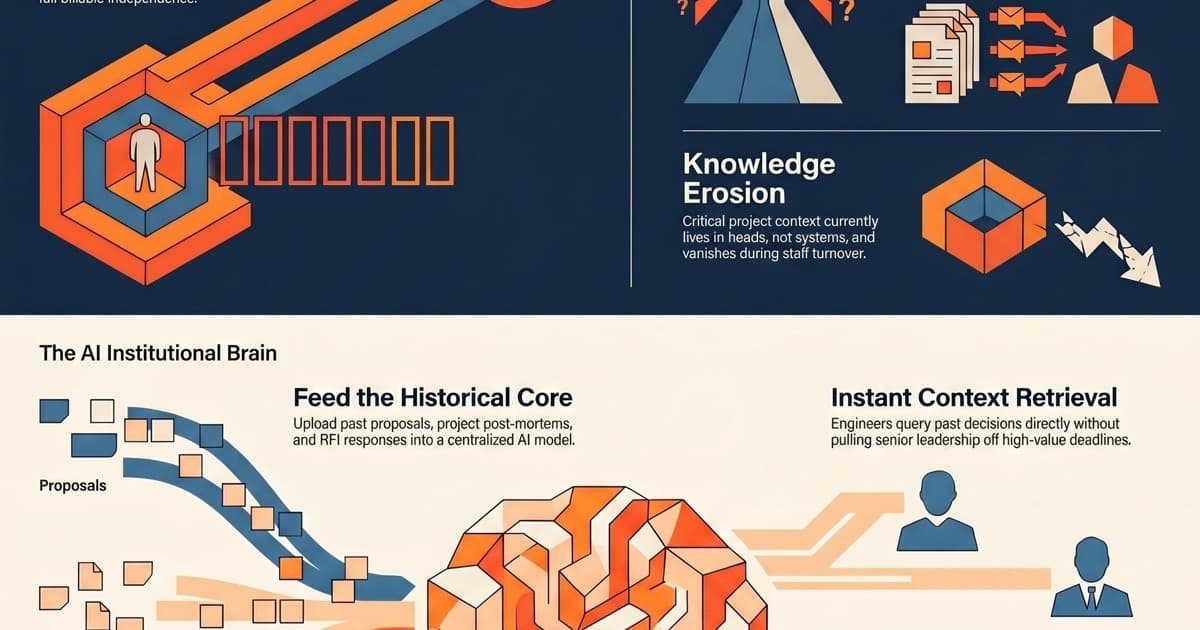
The Memory Problem Every Engineering Firm Has (and the Fix Most Haven't Tried)
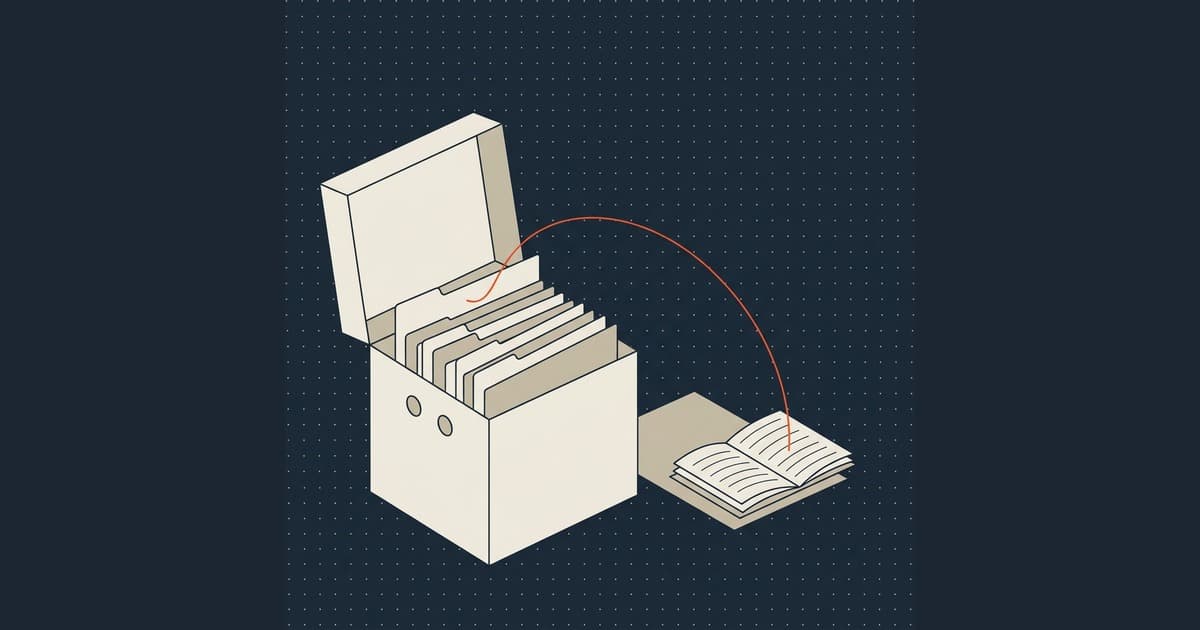
Give Your AI a Memory
I stopped re-explaining context to Claude every session. Connecting it to NotebookLM gave our engineering firm a permanent second brain — and changed how we run proposals, post-mortems, and onboarding.